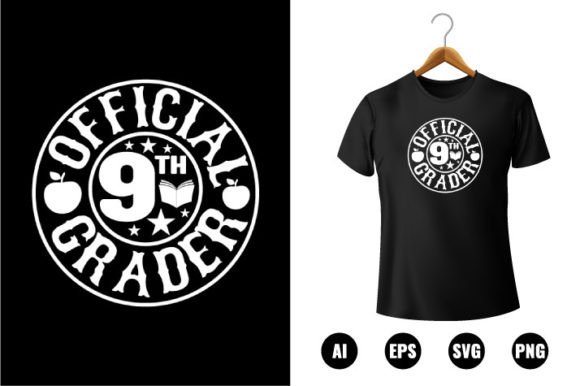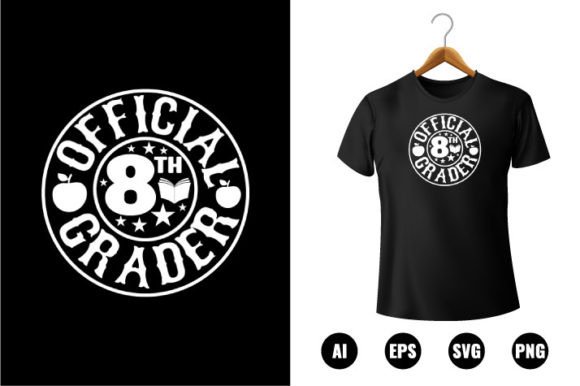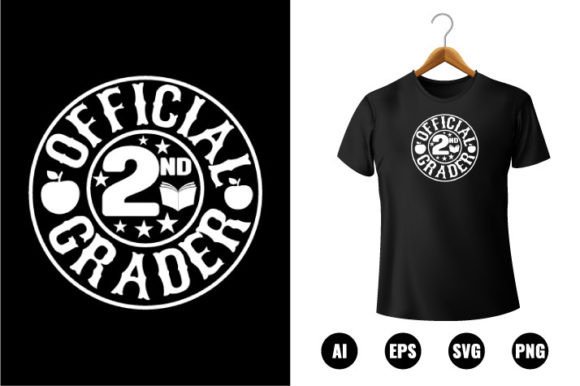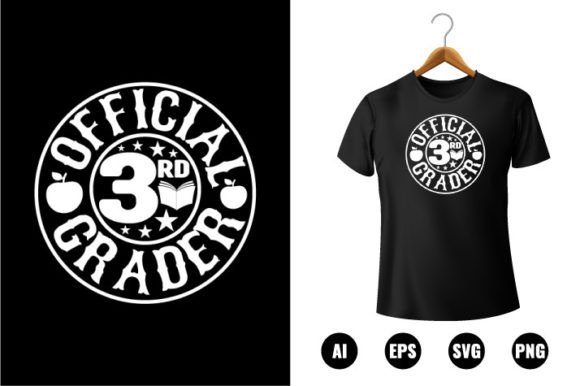
Official 3rd Grader T-shirt Design
If you’ve ever tried to pull together a fun, meaningful, and cohesive back-to-school moment—whether for your own child, a classroom full of third graders, or even a small business launching a seasonal campaign—you know how much weight a simple t-shirt can carry. The Official 3rd Grader T-shirt Design isn’t just playful clip art—it’s a flexible, production-ready creative tool built for real-life use across schools, families, small businesses, and craft communities.
What This Design Really Is (Beyond the Name)
At its core, the Official 3rd Grader T-shirt Design is a vector-based digital asset package designed specifically around the energy, pride, and milestones of third grade. Think: bold typography that says “3rd Grade,” cheerful icons (like pencils, backpacks, or stars), subtle academic motifs (think open books or graduation caps scaled for elementary age), and room for personalization—names, school names, years, or inside jokes only third graders and their teachers truly understand.
But here’s what makes it different from generic “school” clip art: it’s not just themed—it’s purpose-built. Every element is layered, labeled, and fully editable so you’re not stuck with one fixed color scheme or layout. That means whether you’re printing 10 shirts for a homeschool co-op or 120 for a public school PTA fundraiser, the design adapts—not the other way around.
Where This Design Fits in Real Life
Let’s talk about where this design shows up—and why it matters:
- Classroom teachers use it to create matching “We’re Third Graders!” shirts for field trips, science fairs, or end-of-year celebrations. One teacher told us she printed them on light-blue cotton tees and added each student’s name in a handwritten font—parents loved the personal touch, and kids wore them all summer.
- Homeschool families lean on it for milestone markers. Third grade often marks the first year of formal spelling bees, multiplication drills, or independent reading logs—so a custom shirt becomes both a celebration and a quiet confidence builder.
- Small print shops and Etsy sellers integrate it into seasonal bundles (“Back-to-School Starter Kit”) because customers consistently search for “third grade shirt design,” “grade 3 clipart,” or “elementary vector t-shirt.” Its file variety (AI, EPS, SVG, PNG) means they can drop it straight into screen-printing software, heat-transfer workflows, or even vinyl-cutting machines without reworking outlines or resolution.
- PTA groups and booster clubs use it as a base layer for fundraising. Swap out the background shape for a school mascot, add a sponsor logo in the corner, and suddenly it’s not just a shirt—it’s community identity on fabric.
- Scrapbookers and memory-keepers repurpose the SVG files into printable banners, journal inserts, or laminated classroom awards. Because it’s 300 DPI and vector-based, shrinking it to fit a 4×6 photo mat or blowing it up for a bulletin board yields crisp results every time.
Why File Types Matter More Than You Think
You’ll get AI, EPS, PNG, and SVG formats—and while that might sound like technical overhead, each serves a distinct role in daily use:
- AI and EPS are your go-to for professional printing services or Adobe Illustrator users who need full layer control—say, swapping out “3rd Grade” for “Grade 3” to match international curriculum naming, or adjusting stroke weights for embroidery digitizing.
- SVG works seamlessly with Cricut, Silhouette, and other cutting machines—ideal if you're making iron-on transfers for a class party or personalized stickers for reading logs.
- PNG is the quick-and-reliable option: transparent background, ready to drop into Canva, PicMonkey, or even Google Slides for digital announcements or parent newsletters.
All files are print-ready at 300 DPI and built in Adobe Illustrator CC—so if you’re collaborating with a designer or sending files to a local shop, there’s no guessing about compatibility or quality loss.
Practical Things to Keep in Mind Before You Use It
While the Official 3rd Grader T-shirt Design is built for ease, a few real-world considerations help avoid hiccups:
- Color flexibility is powerful—but test before mass printing. Since all colors are 100% changeable, it’s tempting to go bold with neon greens or metallic golds. But keep in mind: screen printers may charge more for spot colors, and DTG (direct-to-garment) printers handle gradients and complex palettes differently than vector silhouettes. A quick proof on your intended fabric type saves time later.
- Resizing is effortless—but proportion matters. You can scale the design to fit toddler tees or adult XLs, but if you’re placing it on a pocket or sleeve, double-check spacing and legibility at smaller sizes. Tiny stars or fine script may blur or disappear below ~1.5 inches tall.
- “Easy to edit” assumes basic vector familiarity. If you’ve never opened Illustrator or Inkscape before, plan 15–20 minutes to explore layers and grouping. Most users find renaming layers (“Text_Block”, “Star_Icon_Group”) intuitive—but don’t assume your team’s intern knows how to ungroup a compound path without guidance.
- It’s grade-specific—not age-specific. While most third graders are 8–9 years old, some children enter third grade earlier or later due to schooling paths, learning needs, or cultural systems. If you’re using this internationally or in inclusive settings, consider pairing the design with neutral phrasing (“Year 3 Explorer” or “Third Grade Achiever”) rather than assuming grade = age.
Who Benefits—and How It Shows Up Differently
A mom organizing her child’s first solo classroom presentation might use the PNG file to quickly mock up a shirt preview in a text message to grandparents. A school district’s marketing coordinator might import the AI file into a brand-aligned template to roll out a district-wide “Third Grade Reads” campaign. A teen running a small sticker shop on Instagram might extract just the star icon from the SVG and pair it with hand-lettered quotes for motivational planner stickers.
That versatility isn’t accidental. It’s baked into the design’s structure: clean vector shapes mean no pixelation when scaled, color-separated layers allow for easy adaptation to school colors, and intentional negative space gives breathing room for names or slogans without visual clutter.
When Simplicity Becomes Your Secret Weapon
In a world of overdesigned templates and crowded layouts, the strength of the Official 3rd Grader T-shirt Design lies in its clarity. It doesn’t try to be everything—it focuses on one joyful, pivotal year and delivers tools that honor how third graders see themselves: capable, curious, and ready to step up. Whether it ends up on a cotton tee, a laminated award, or a digital newsletter banner, it carries that same grounded, upbeat energy—no extra explanation needed.
And because it’s built for reuse—not one-time use—it grows with you. Add a new font next year. Swap in a different icon set for a STEM-themed version. Layer it with photos from last year’s field trip. The design stays useful, long after the first bell rings.