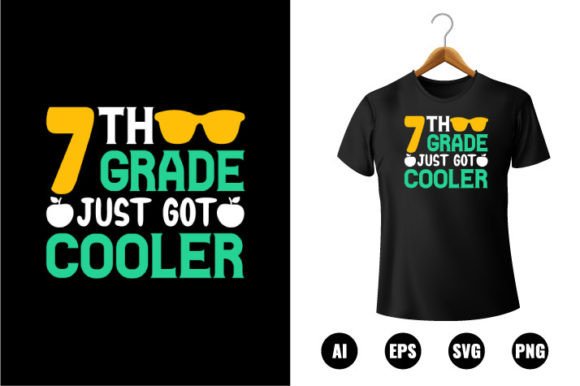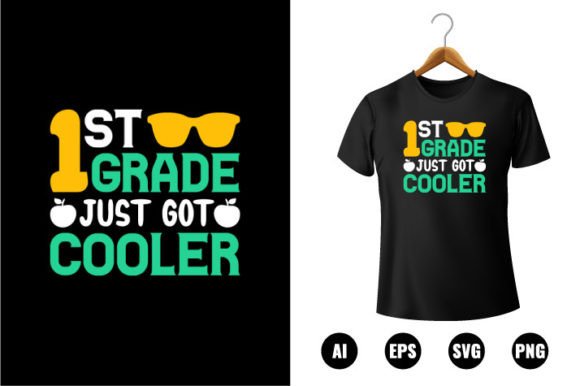
1st Grade Just Got Cooler T-shirt Design: A Smart Creative Asset for Modern Educators and Entrepreneurs
When a simple phrase like “1st Grade Just Got Cooler” lands on a vibrant, print-ready T-shirt design — it does more than spark a smile. It signals a quiet but powerful shift in how educators, small business owners, and creative professionals approach back-to-school branding, classroom culture, and consumer-facing merchandise. The 1st Grade Just Got Cooler T-shirt Design isn’t just playful typography or nostalgic charm. It’s a purpose-built digital asset engineered for flexibility, scalability, and real-world usability — one that reflects deeper trends in education marketing, on-demand apparel production, and the democratization of professional-grade design tools.
A Design That Bridges Education and Entrepreneurship
The 1st Grade Just Got Cooler T-shirt Design is a back-to-school T-shirt design crafted with intention — not just for kids, but for the adults who support them. Teachers use it to build classroom identity; PTA groups adopt it for spirit days; school photographers integrate it into portrait packages; and boutique apparel shops feature it in curated “learning milestone” collections. What makes this particular design stand out is its dual resonance: it celebrates academic achievement (the pride of completing kindergarten and stepping into first grade) while tapping into a broader cultural move toward joyful, affirming learning experiences.
This isn’t nostalgia for nostalgia’s sake. It’s strategic empathy — recognizing that families increasingly seek products that reflect growth, confidence, and individuality rather than generic “school supply” tropes. In a market where 68% of parents say they prefer brands that align with their values around child development (2023 EdTech Consumer Survey), a design like 1st Grade Just Got Cooler T-shirt Design becomes more than apparel — it becomes a subtle statement of pedagogical alignment.
Why This Design Fits Today’s Creative and Production Realities
Behind the cheerful message lies technical sophistication — and that’s where its value multiplies for professionals. Unlike raster-based graphics that blur when scaled, this is a fully vector-based resource delivered in AI, EPS, PNG, and SVG formats. That means designers can resize it for a toddler’s onesie or a 4’x8’ event banner — without losing edge clarity. Marketers can recolor it in seconds to match school colors or seasonal campaigns. Engravers can import the SVG directly into laser-cutting software. Print-on-demand platforms accept the 300 DPI, print-ready files without preflight hiccups.
Consider a freelance graphic designer working with a charter school launching its first branded merchandise line. They receive the 1st Grade Just Got Cooler T-shirt Design, open it in Adobe Illustrator CC, change the font color from navy to forest green in under 10 seconds, add a custom monogram in the corner, and export five size variants — all before lunch. That speed isn’t incidental. It’s built into the file architecture: 100% vector shapes, layer-named components, and non-destructive editing paths. No flattening. No pixelation. No guesswork.
More Than a T-Shirt — A Multi-Use Creative Foundation
The versatility extends far beyond clothing. Because the design comes with editable layers and color-swappable elements, it adapts seamlessly across mediums:
- Clothes printing: Works flawlessly with DTG, screen print, and sublimation workflows — especially valuable for small-batch school stores or teacher-led fundraisers.
- Engraving & cutting: Clean vector paths ensure crisp results on wood, acrylic, or leather for personalized name tags, awards, or classroom décor.
- Stickers & vinyl decals: The SVG format integrates natively with Cricut Design Space and Silhouette Studio — enabling teachers to create motivational stickers for reading logs or behavior charts.
- Canvas & scrapbooking: High-resolution PNGs at 300 DPI provide rich detail for printed wall art or memory books celebrating the transition to first grade.
- Printable decoration: Teachers convert elements into PDFs for bulletin board kits, flashcards, or parent handouts — reinforcing visual consistency across learning environments.
This cross-platform readiness reflects a larger industry evolution: the convergence of design, manufacturing, and distribution. As hardware like desktop cutters and compact DTG printers become accessible to schools and micro-businesses, demand surges for assets that “just work” — no retouching, no outsourcing, no licensing friction. The 1st Grade Just Got Cooler T-shirt Design meets that need precisely because it was built for interoperability, not isolation.
Aligning With Broader Shifts in Learning Culture and Consumer Expectations
There’s growing recognition — backed by research from organizations like the National Association for the Education of Young Children (NAEYC) — that early learning environments thrive when they emphasize agency, belonging, and visible celebration of progress. A T-shirt declaring “1st Grade Just Got Cooler” doesn’t trivialize academics. Instead, it reframes learning as aspirational, social, and full of possibility — a mindset increasingly prioritized in curriculum frameworks and family engagement strategies.
Simultaneously, consumers — especially millennial and Gen Z parents — expect personalization, transparency, and ethical production. They notice whether a product feels mass-produced or meaningfully made. When a local teacher sells shirts featuring this design at a fall festival, buyers aren’t just purchasing cotton — they’re supporting a human-centered narrative. That emotional resonance translates directly into conversion rates, repeat purchases, and organic social sharing.
Entrepreneurs building education-adjacent brands — think subscription boxes for emerging readers, STEM kits for K–2, or bilingual learning apps — are also integrating designs like 1st Grade Just Got Cooler T-shirt Design into launch bundles. Why? Because it adds tangible, shareable value. A parent posts a photo of their child wearing the shirt alongside a new phonics workbook. That image becomes authentic, low-cost marketing — rooted in real usage, not staged influencer content.
Design Workflow Efficiency Meets Educational Impact
For creators managing tight deadlines and limited resources, time savings compound quickly. Imagine a school district communications team preparing for orientation week. Instead of commissioning custom artwork (a 5–7 day process with revisions), they license the 1st Grade Just Got Cooler T-shirt Design, customize colors to match district branding, generate mockups for approval in under an hour, and send final files to their print vendor — all within a single afternoon.
That efficiency matters. It means more budget can go toward student materials instead of design overhead. It means faster turnaround for pop-up events or emergency spirit days. And crucially, it means consistency: the same core visual language appears on T-shirts, digital newsletters, slide decks, and classroom posters — strengthening recognition and reinforcing messaging.
Even more impactful is what this efficiency enables: iteration. Because the design is fully editable, teams can test variations — swapping icons, adjusting layout hierarchy, or translating text — without starting from scratch. One district added a small sun icon beside “Cooler” to symbolize warmth and growth; another replaced the standard script font with a dyslexia-friendly sans-serif for inclusivity. These aren’t afterthoughts — they’re intentional adaptations made possible by thoughtful file construction.
Looking Ahead: Design as Infrastructure
The 1st Grade Just Got Cooler T-shirt Design exemplifies a growing category: design-as-infrastructure. Not decorative flair, but foundational, reusable, interoperable visual code — ready to embed into workflows, scale across audiences, and evolve with needs. As AI-assisted design tools mature and cross-platform publishing accelerates, the value of clean, well-structured assets will only increase.
For professionals navigating fast-moving education markets, tech-enabled creative services, or community-driven commerce, choosing resources like this isn’t about convenience alone. It’s about future-proofing. It’s about ensuring your visual language remains flexible, inclusive, and aligned — whether you’re outfitting a single classroom or launching a national brand.
In short: 1st Grade Just Got Cooler T-shirt Design is more than a back-to-school T-shirt design. It’s a reflection of how far we’ve come — and how thoughtfully we can move forward.