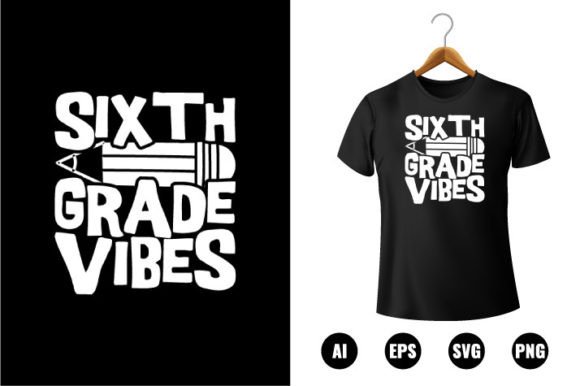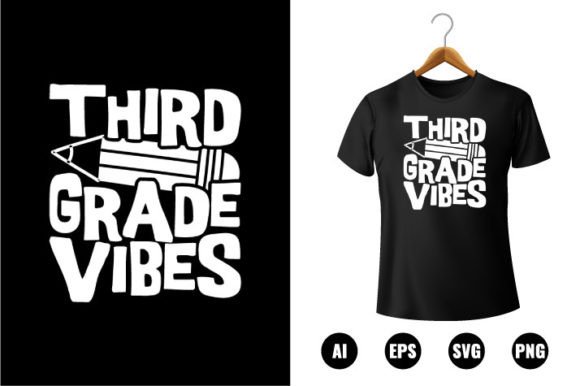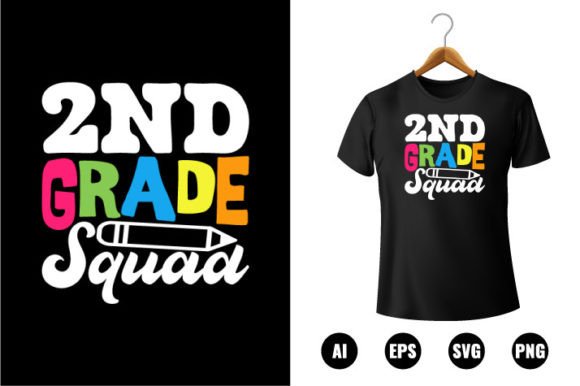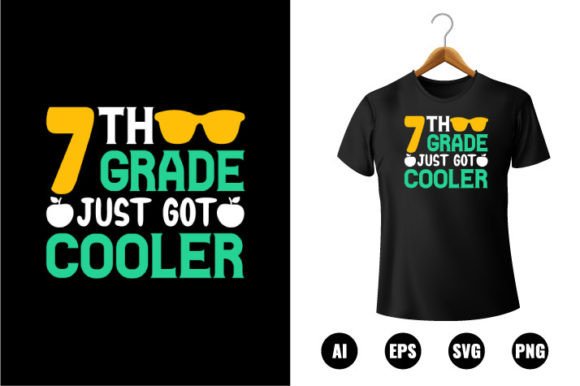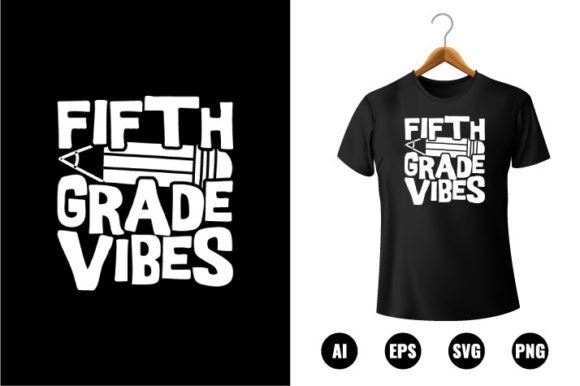
5th Grade Vibes T-shirt Design
If you're designing back-to-school apparel, classroom decor, or student engagement materials—especially for upper elementary learners—you’ll quickly recognize how rare it is to find a design that balances age-appropriate energy with real-world production flexibility. The 5th Grade Vibes T-shirt Design fills that gap thoughtfully: it’s not just nostalgic or playful—it’s built for action. This isn’t clip art you’ll need to redraw, reformat, or apologize for at print time. It’s a production-ready digital asset engineered for creators who value precision, speed, and creative control.
Why “5th Grade Vibes” Works Where Other Designs Fall Short
Fifth grade sits at a pivotal developmental moment—students are gaining independence, refining critical thinking, and responding strongly to tone, humor, and visual identity. Generic “back to school” graphics often skew too young (cartoonish animals, oversized fonts) or too generic (abstract pencils, bland apples). The 5th Grade Vibes T-shirt Design avoids both traps. Its composition—balanced typography, confident iconography, and intentional negative space—communicates maturity without losing warmth. That nuance matters when you’re ordering 30+ shirts for a classroom team, launching a PTA fundraiser, or building a cohesive brand for an after-school program.
File Flexibility That Saves Hours—Not Just Clicks
You’ll receive the design in AI, EPS, PNG, and SVG formats, all at 300 DPI and compatible with Adobe Illustrator CC. That means no guessing whether your local screen printer can open the file—or worse, discovering mid-order that your SVG won’t scale cleanly for a 12" x 16" tote bag. The 5th Grade Vibes T-shirt Design is truly print-ready: no rasterized text, no embedded JPEGs, no hidden layers blocking edits. Every element is a vector shape—100% resizable without quality loss—and each color is fully editable, letting you match school colors, adapt for light/dark garments, or create seasonal variations (think navy-and-gold for fall spirit week, then teal-and-silver for winter STEM day).
Real Use Cases—Beyond the T-Shirt
While “T-shirt Design” is in the name, its utility extends far beyond apparel:
- Classroom signage: Resize the core graphic to fit a 24" x 36" bulletin board header—then change the background to match your current unit theme (e.g., galaxy blue for space science, earthy green for ecology).
- Student awards & recognition: Layer the design onto certificate templates in Canva or Illustrator; swap out “5th Grade Vibes” for “Science Star” or “Math Maven” using the editable text paths.
- Engraved keepsakes: Export the SVG for laser engraving on wooden bookmarks, acrylic desk tags, or metal keychains—ideal for end-of-year gifts that avoid plastic waste.
- Digital learning assets: Drop the transparent PNG into Google Slides or PowerPoint as a consistent slide footer, reinforcing identity across remote lesson decks.
Teachers use it to unify their classroom aesthetic without starting from scratch. Small business owners running custom apparel shops apply it to mockups for Etsy listings—knowing clients will get pixel-perfect results whether ordering one shirt or fifty. Bloggers and curriculum designers embed it in printable activity packs, confident it won’t blur when downloaded and printed on home inkjets.
Who Benefits Most—and Why Timing Matters
This design serves three groups especially well:
- Educators preparing for fall: With supply budgets tightening and prep time shrinking, having a polished, adaptable design eliminates hours of trial-and-error in Canva or free vector tools—where font licensing, scaling issues, or missing outlines often derail projects.
- Print-on-demand sellers and micro-studios: You can confidently list “5th Grade Vibes” tees, hoodies, and mugs knowing the files meet industry standards for DTG, screen printing, and sublimation. No client complaints about blurry edges or uneditable colors.
- Hobbyists and parent volunteers: Whether organizing a field day or designing spirit wear for a homeschool co-op, the ease of color swapping and resizing means you don’t need design training—just clear intent.
Note: While the design is optimized for grades 4–6, it may feel slightly advanced for younger students or underwhelming for middle schoolers seeking more sophisticated visuals. If your audience spans wider age ranges, consider pairing it with complementary designs rather than stretching this one beyond its natural fit.
Editing Without Friction—What “Easy to Edit” Actually Means
“Easy to edit” is often oversold. In this case, it’s literal: every component—including text, icons, and decorative elements—is a separate, labeled vector object. No grouped layers hiding complexity. No locked attributes. You can select the pencil icon and recolor it magenta in two clicks—or isolate the “Vibes” wordmark and adjust tracking for tighter spacing on a youth small tee. Because it’s built in Illustrator CC, you retain full control over gradients, transparency, and path editing—unlike PNG-only bundles that force workarounds.
That capability becomes essential when adapting for accessibility: increasing contrast for visually impaired students, simplifying shapes for tactile printing, or exporting high-DPI versions for large-format displays in school hallways.
A Practical Note on Physical Fit and Application
The design scales cleanly—but placement still matters. For standard adult or youth t-shirts, centering the graphic 3–4 inches below the collar works best. On performance fabrics or curved surfaces (like water bottles or curved tote bags), test a small print first: vector fidelity holds, but fabric texture or curvature can subtly affect perceived sharpness. Also, while the PNG includes transparency, always use the vector formats (AI/EPS/SVG) for any application requiring crisp lines at large sizes—especially embroidery digitizing or vinyl cutting.
Final Thought: Design as Infrastructure, Not Decoration
The 5th Grade Vibes T-shirt Design functions less like a static image and more like infrastructure—a reusable, reliable component in your creative workflow. It reduces decision fatigue when launching back-to-school initiatives, cuts revision cycles during client feedback, and supports consistency across physical and digital touchpoints. That reliability compounds: the more you use it—across stickers, canvas banners, scrapbook pages, or engraved tokens—the more familiar and trusted it becomes for your audience. And in education and community-building, familiarity isn’t just convenient—it’s a quiet signal of care, continuity, and shared identity.